
Healthcare with Confidence
Brain Tumor Surgery in Israel: Leading Neurosurgeons, Awake Surgery and Intraoperative MRI
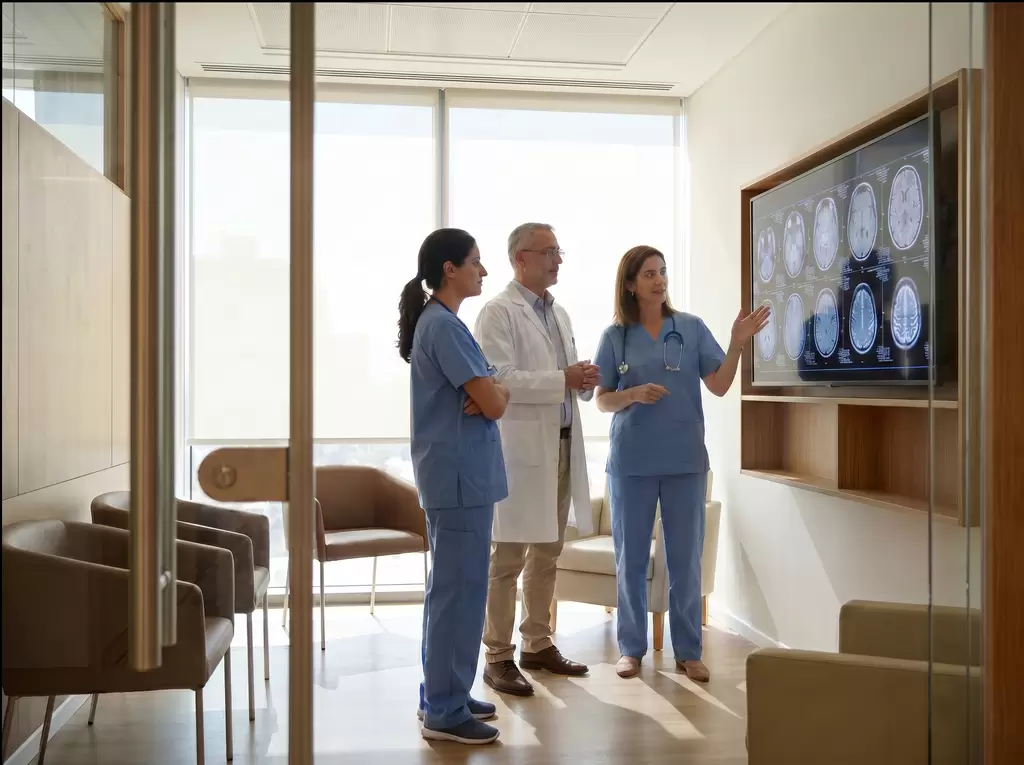
If you or someone close to you has been diagnosed with a brain tumor, you may feel overwhelmed, frightened, and unsure what to do next.
You may be asking yourself: Is surgery possible? Is it safe? Can the tumor be removed without damaging speech, movement, memory, or personality? Should we get another opinion before making such an important decision?
Our patients are referred for consultation and brain tumor surgery with leading Israeli neurosurgeons, including professors, heads of neurosurgery departments, and senior specialists in brain tumor surgery.
These doctors have extensive experience in complex brain tumor removal, awake brain surgery, intraoperative MRI, neuronavigation, and advanced microsurgical techniques.
Their goal is not only to remove the tumor, but to do it as safely as possible while protecting the functions that make you who you are — your ability to speak, move, think, see, remember, work, and communicate with your family.
⇓ Below on this page you will be able to choose a leading Israeli neurosurgeon for your case
Israel is known for advanced neurosurgery, experienced brain tumor surgeons, modern operating rooms, and a multidisciplinary approach.
Your case can be reviewed by leading Israeli neurosurgeons together with neuro-oncologists, neuroradiologists, pathologists, radiation oncologists, and rehabilitation specialists when needed.
When May You Need Brain Tumor Surgery?
Brain tumor surgery may be recommended for both benign and malignant tumors. In many cases, surgery is the first and most important step in diagnosis and treatment.
Your neurosurgeon may recommend surgery in order to:
- Remove the tumor completely or partially
- Reduce pressure on the brain
- Improve neurological symptoms
- Receive tissue for accurate pathology
- Perform molecular testing of the tumor
- Confirm the exact diagnosis
- Prepare the next steps of treatment, such as radiation, chemotherapy, targeted therapy, or immunotherapy
Sometimes the tumor cannot be removed completely because it is located close to areas responsible for speech, movement, vision, memory, or other important functions.
In these cases, the goal is maximal safe resection — removing as much of the tumor as possible while protecting your neurological function.
Brain Tumors Treated by Neurosurgeons in Israel
Israeli neurosurgeons treat many types of brain tumors, including:
- Glioblastoma
- Astrocytoma
- Oligodendroglioma
- Low-grade glioma
- Meningioma
- Brain metastases
- Pituitary tumors
- Acoustic neuroma / vestibular schwannoma
- Ependymoma
- Medulloblastoma
- Skull base tumors
- Pineal region tumors
- Recurrent brain tumors after previous treatment
Every brain tumor is different. Even if two people have the same diagnosis, their treatment plan may be different. The decision depends on the tumor size, location, symptoms, MRI findings, molecular profile, previous treatment, general health, and surgical risks.
This is why an individual neurosurgical opinion is so important.
Why Choose Brain Tumor Surgery in Israel?
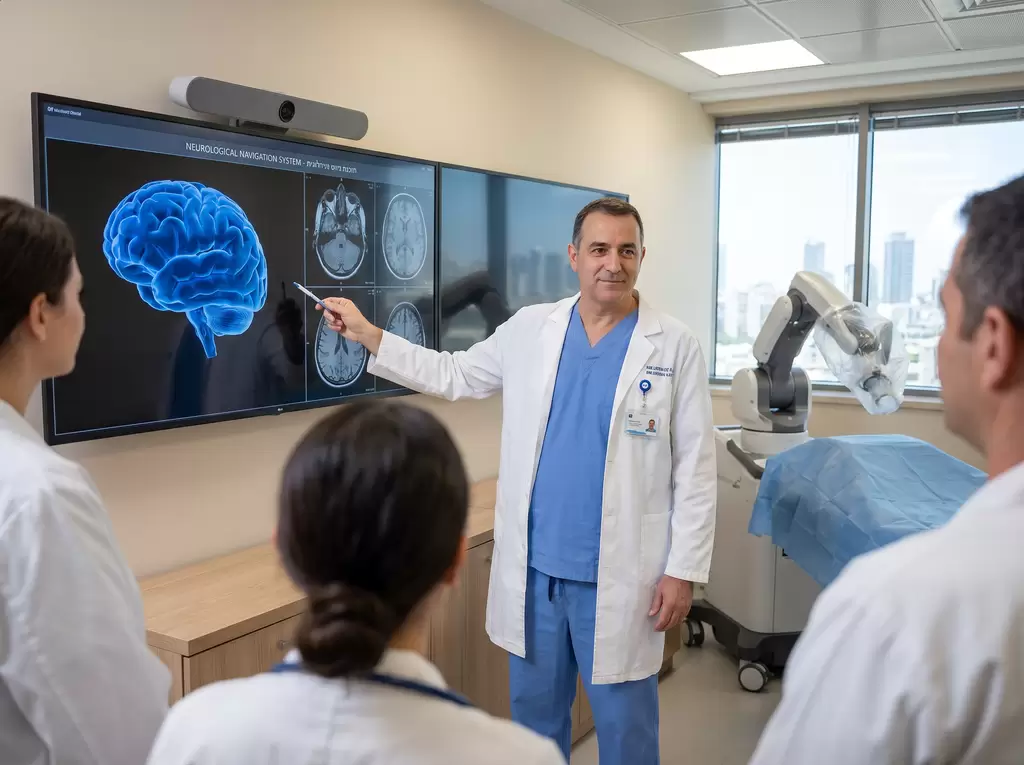
If you are considering brain tumor surgery abroad, Israel may offer you access to experienced neurosurgeons, advanced technology, and a clear treatment pathway from diagnosis to surgery and further therapy.
Brain tumor surgery in Israel may include:
- Consultation with a senior neurosurgeon
- Review of your MRI, CT, PET-CT, and medical records
- Advanced brain MRI protocols
- Functional MRI when needed
- Neuronavigation
- Brain mapping
- Intraoperative neurophysiological monitoring
- Awake craniotomy for selected tumors
- Intraoperative MRI in selected cases
- Microsurgical tumor removal
- Pathology and molecular testing
- Postoperative neuro-oncology consultation
- Personalized treatment planning after surgery
For you and your family, the most important advantage is not only the surgery itself.
It is the possibility to receive a clear, professional plan: what should be done now, what risks exist, what treatment may be needed after surgery, and how to make the safest decision.
Intraoperative MRI During Brain Tumor Surgery
Intraoperative MRI is an advanced technology that allows the surgical team to perform MRI imaging while you are still in the operating room.
This can be very important because during surgery, the brain may shift slightly. When this happens, the MRI images taken before surgery may no longer show the exact current position of the tumor. Intraoperative MRI gives the neurosurgeon updated information during the operation.
Intraoperative MRI may help:
- Check how much of the tumor has been removed
- Detect possible remaining tumor tissue
- Improve surgical precision
- Update navigation during surgery
- Support maximal safe tumor removal
- Reduce the chance of needing another early surgery in selected cases
Not every person needs intraoperative MRI. Your neurosurgeon will decide whether this technology is important for your specific tumor type, location, and surgical plan.
Modern Technologies Used in Brain Tumor Surgery
Modern brain tumor surgery is much more precise than in the past. In Israel, selected neurosurgical centers use advanced technologies to help improve safety and surgical accuracy.
- Neuronavigation. Works like a GPS system for the brain. It helps the neurosurgeon plan the safest route to the tumor using your MRI or CT images.
- Functional MRI. Helps identify important areas of the brain before surgery, especially areas connected to speech, movement, and other functions.
- DTI Imaging. Diffusion tensor imaging, or DTI, helps show important nerve pathways in the brain. This can help the neurosurgeon avoid damage to critical brain connections.
- Brain Mapping. Can be performed before or during surgery. It helps the neurosurgeon understand which areas must be protected.
- Intraoperative Monitoring. During the operation, neurophysiological monitoring can help track important brain and nerve functions. If changes appear, the surgical team can respond immediately.
- Microsurgery. Microsurgical techniques allow the neurosurgeon to work with high magnification and precision, which is especially important when the tumor is close to delicate brain structures.
What Happens Before Surgery?
Before any decision is made, your Israeli neurosurgeon will carefully review your medical information.
⇓ Below on this page you will be able to choose a leading Israeli neurosurgeon for your case
In many cases, the first step can be an online consultation. This allows you and your family to understand whether surgery in Israel may be possible and what documents are needed before arrival.
After reviewing your case, the neurosurgeon may recommend additional imaging, blood tests, cardiology evaluation, anesthesiology assessment, or consultations with other specialists.
What to Expect During Hospitalization in Israel

Your hospital stay will depend on the tumor type, surgical complexity, your age, neurological condition, and recovery after surgery.
In general, the process may include:
- Hospital admission
- Preoperative tests
- Meeting with the neurosurgeon and anesthesiologist
- Brain tumor surgery
- Monitoring after surgery
- Postoperative MRI or CT
- Neurological evaluation
- Pathology and molecular testing
- Rehabilitation assessment if needed
- Discharge plan
- Recommendations for further treatment
After surgery, you may need radiation therapy, chemotherapy, targeted therapy, immunotherapy, tumor-treating fields, rehabilitation, or regular MRI follow-up. Your next steps will depend on the final pathology and molecular results.
Why a Second Opinion Is Important
When you are facing brain tumor surgery, a second opinion can help you feel more confident and informed.
You may need a second opinion if:
- You were told the tumor is inoperable
- You were told surgery is very risky
- You want to know whether awake surgery is needed
- You want to know whether intraoperative MRI may help
- You already had surgery and the tumor returned
- You are not sure whether surgery, biopsy, radiation, or drug treatment is the right next step
- You want to understand the risks before making a decision
A second opinion from a leading neurosurgeon in Israel can help you understand your real options. Sometimes surgery is recommended. Sometimes biopsy or non-surgical treatment is safer. The most important thing is to receive a clear explanation based on your specific case.
Molecular Testing After Brain Tumor Surgery
Today, brain tumor treatment depends not only on the tumor name, but also on its molecular profile.
After surgery, tumor tissue may be tested for important markers such as: IDH mutation, MGMT promoter methylation, 1p/19q codeletion, TERT promoter mutation, ATRX, p53, BRAF, NTRK, MSI, Tumor mutational burden, Broader next-generation sequencing panels.
These results can help your doctors understand the tumor better and plan further treatment. In selected cases, molecular testing may also help identify targeted therapy or clinical trial options.
Is Brain Tumor Surgery in Israel Right for You?
Brain tumor surgery in Israel may be an option for you if you want an expert opinion, advanced surgical planning, and access to experienced neurosurgeons.
However, surgery is not suitable for every case. The decision depends on:
- Tumor location
- Tumor size
- Tumor type
- Your neurological condition
- Your age and general health
- Previous treatments
- Surgical risks
- Expected benefit from surgery
- Urgency of the situation
A responsible neurosurgical consultation should explain both the possible benefits and the risks. You deserve to understand your options clearly before making a decision.
How We Can Help You
At ResultMed, we help international patients receive medical guidance in Israel. We coordinate consultations with experienced Israeli specialists and help you understand the full treatment pathway — from diagnosis to surgery and follow-up care. That means appointment with a leading neurosurgeon in Israel, hospital and surgery coordination, pathology and molecular testing, neuro-oncology consultation after surgery, radiation oncology consultation, rehabilitation planning, medical translation and communication support, clear explanation for you and your family
Our goal is to help you feel less alone, understand your options, and receive the right care at the right time.
 Professor Zvi Ram
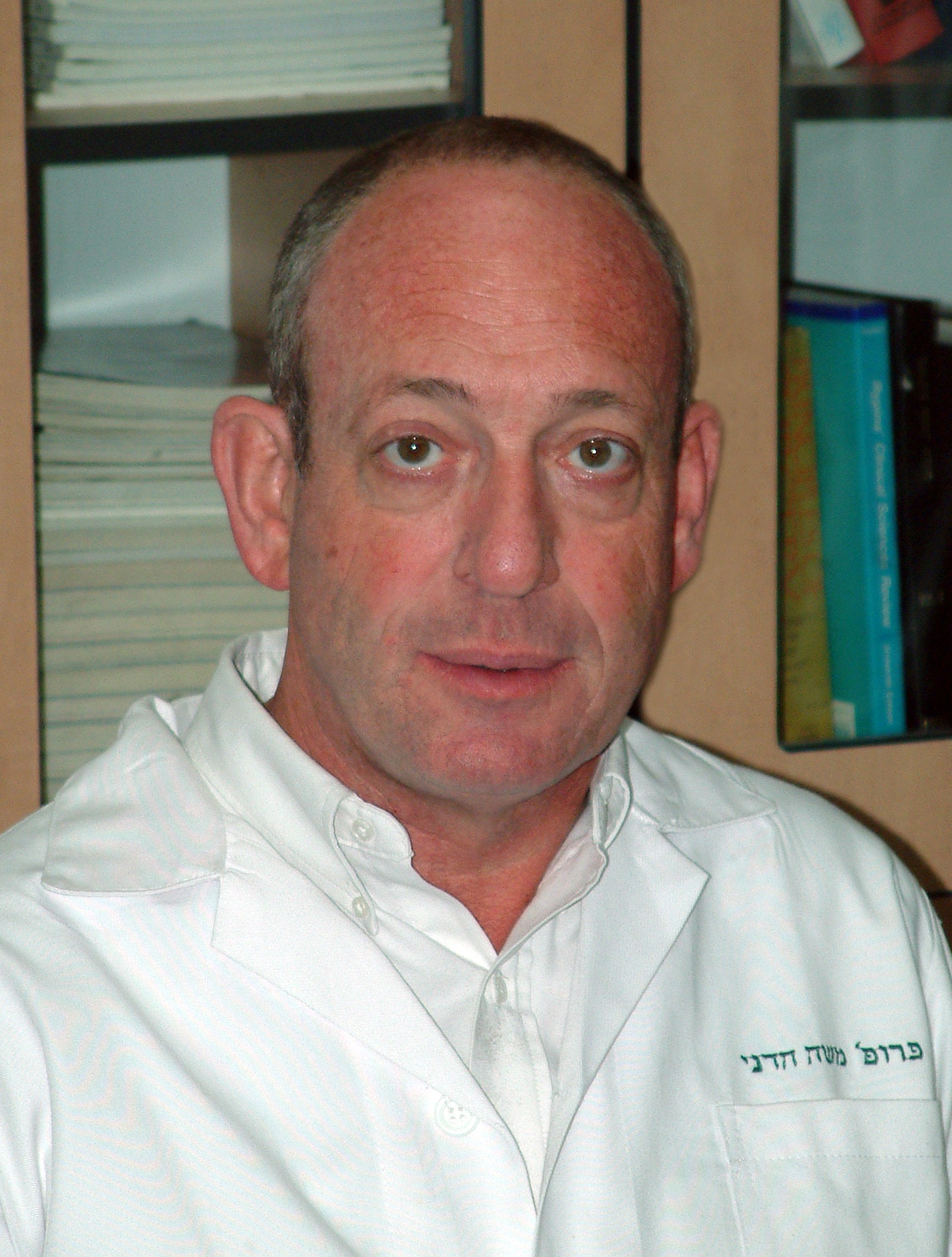 Professor Moshe Hadani
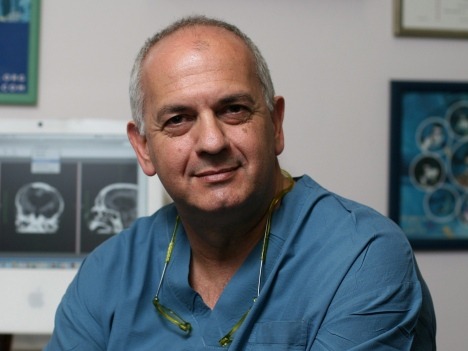 Professor Shlomo Constantini